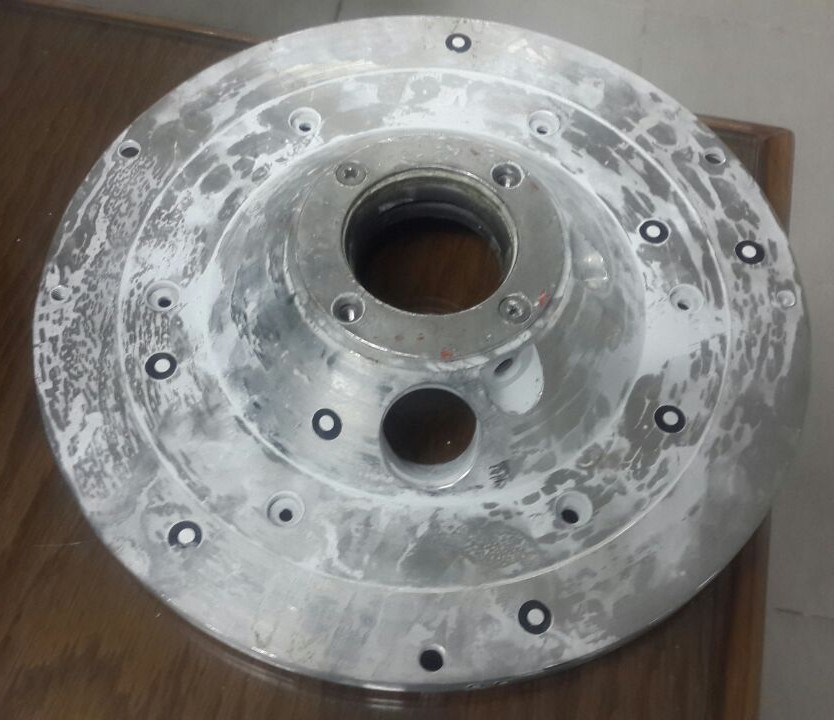
Industrial 3D scanning is the fastest and most accurate way to capture the real geometry of a part especially when it is complex, large, worn, or difficult to measure manually.
Instead of taking hundreds of measurements with calipers and tapes (and still missing details), we use high-precision 3D scanners to create a complete digital copy of the part.
This is essential for reverse engineering, quality control, fit-checking, and documenting existing machinery.
- High-Resolution Scanning
We capture millions of points on the surface of the part, creating a highly detailed 3D representation.
- complex castings
- worn parts
- freeform shapes
- large, welded structures
- custom tools and jigs
This provides a level of detail that is impossible to achieve with manual measurement.
- Scan-to-Mesh, Scan-to-Surface, Scan-to-CAD
After scanning, we process the data based on your needs:
- Scan-to-Mesh → STL / OBJ for visualization, 3D printing, basic checks
- Scan-to-Surface → smoothed surfaces (NURBS) for further processing
- Scan-to-CAD → fully reconstructed CAD geometry, ready for:
- machining
- modification
- FEA analysis
- manufacturing drawings
This turns a physical part into a usable engineered digital model.
- Measurement & Inspection
We use the scanned data for:
- dimensional inspection
- measurement of critical features
- checking hole positions, flatness, parallelism, symmetry
- verifying fit between mating components
This is extremely valuable when:
- original drawings are missing
- parts are custom-made
- you want to compare “what is built” vs “what was designed”